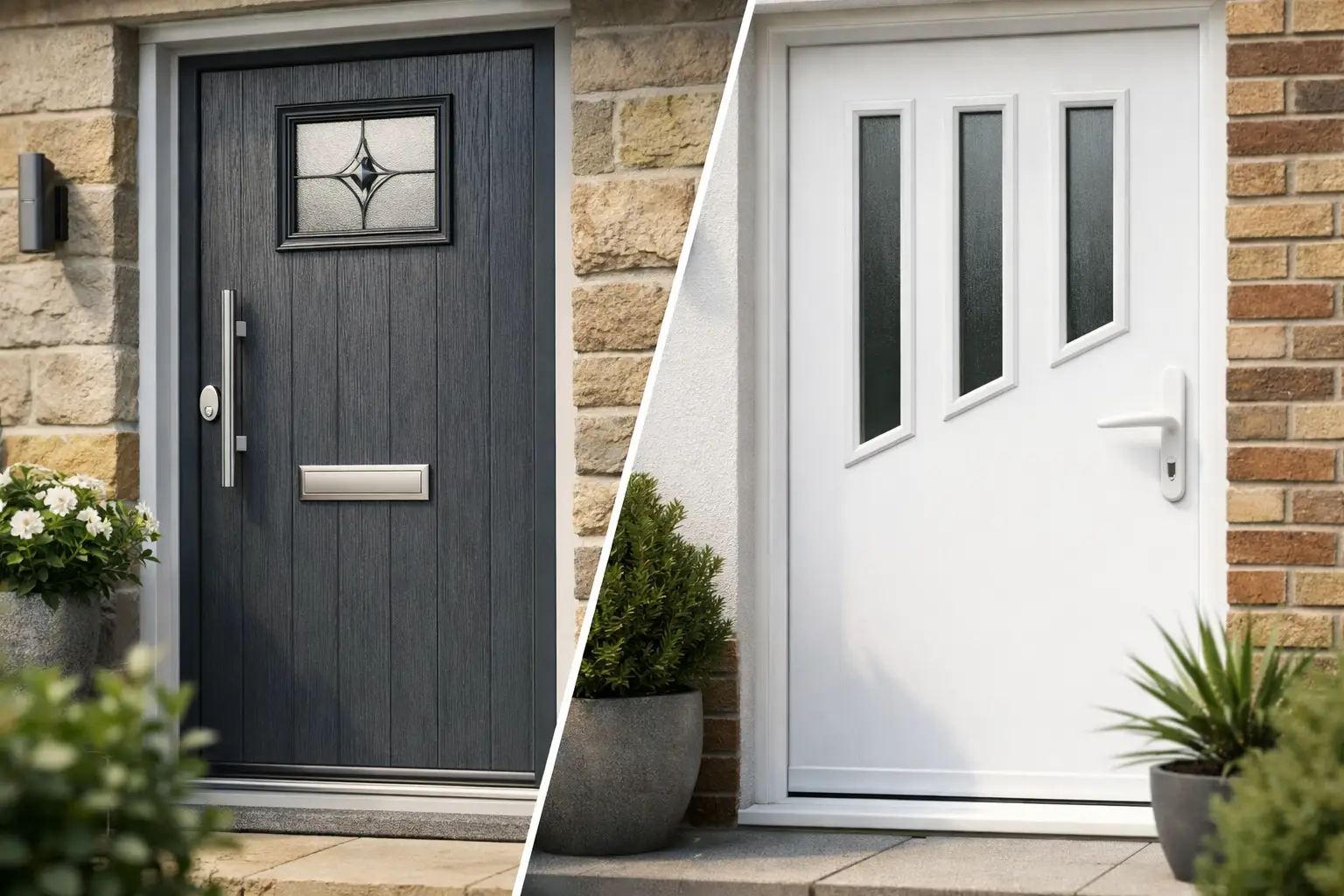
A front door has a hard job. It needs to keep heat in, weather out, stand up to daily use and still look right every time you pull onto the drive. When homeowners compare composite doors vs uPVC, they are usually weighing up the same thing – is it worth paying more for a composite door, or does a well-made uPVC door do the job just as well?
The honest answer is that it depends on your priorities. If budget is the main concern, uPVC can be a very sensible option. If you want a stronger, more premium-looking entrance with excellent security and a longer-lasting finish, composite often comes out in front. The right choice is not the most expensive one. It is the one that suits your home, your expectations and how long you plan to stay there.
Composite doors vs uPVC at a glance
Both options are popular for good reason. uPVC doors are widely chosen because they are affordable, low maintenance and available in a good range of styles. Composite doors are designed to offer a step up in strength, appearance and performance, using a mix of materials rather than a single plastic profile.
That difference in construction matters. A standard uPVC door is usually made from unplasticised polyvinyl chloride with reinforced sections and panels. A composite door combines materials such as a solid core, glass-reinforced plastic skin and insulating layers to create a door that feels heavier, sturdier and more like a traditional high-quality entrance door.
On paper, both can be secure and energy efficient. In practice, the quality of the product and the standard of installation make a major difference. A poorly fitted composite door will not perform as it should, and a decent uPVC door fitted properly can still be a reliable choice for many homes.
Cost – where the biggest gap usually appears
For most people, price is the starting point. uPVC doors are usually the cheaper option, which makes them attractive if you are replacing a tired front or back door on a tighter budget. They can also make sense for landlords or for secondary entrances where appearance is less of a priority.
Composite doors typically cost more because the materials and manufacturing are more advanced. You are paying for a thicker door slab, a more substantial feel and, in many cases, a more convincing timber-style appearance. That higher initial cost can put some homeowners off, especially if they are comparing quotes and looking only at the bottom line.
But price should be looked at over time, not just on the day you order. If a composite door stays looking smart for longer, resists warping better and adds more to kerb appeal, the extra spend may feel justified. If you simply need a practical, secure replacement without stretching the budget, uPVC remains a strong contender.
Security and strength
Security is one of the clearest advantages of composite doors. Because they tend to have a denser, more solid core, they usually feel stronger and more substantial than uPVC. That does not mean every uPVC door is insecure. Far from it. A quality uPVC door with the right reinforcement, frame and locking system can still offer very good protection.
The difference is often in rigidity and resistance to impact. Composite doors generally flex less and give a more solid closing action, which many homeowners associate with better security. They also tend to pair well with modern multi-point locking systems and high-security hardware.
If security is your top concern, it is worth looking beyond the material alone. Ask about the lock, the cylinder, the hinges, the reinforcement and the standard of the frame. The best door on paper can be let down by poor fitting or cheaper hardware.
Appearance and kerb appeal
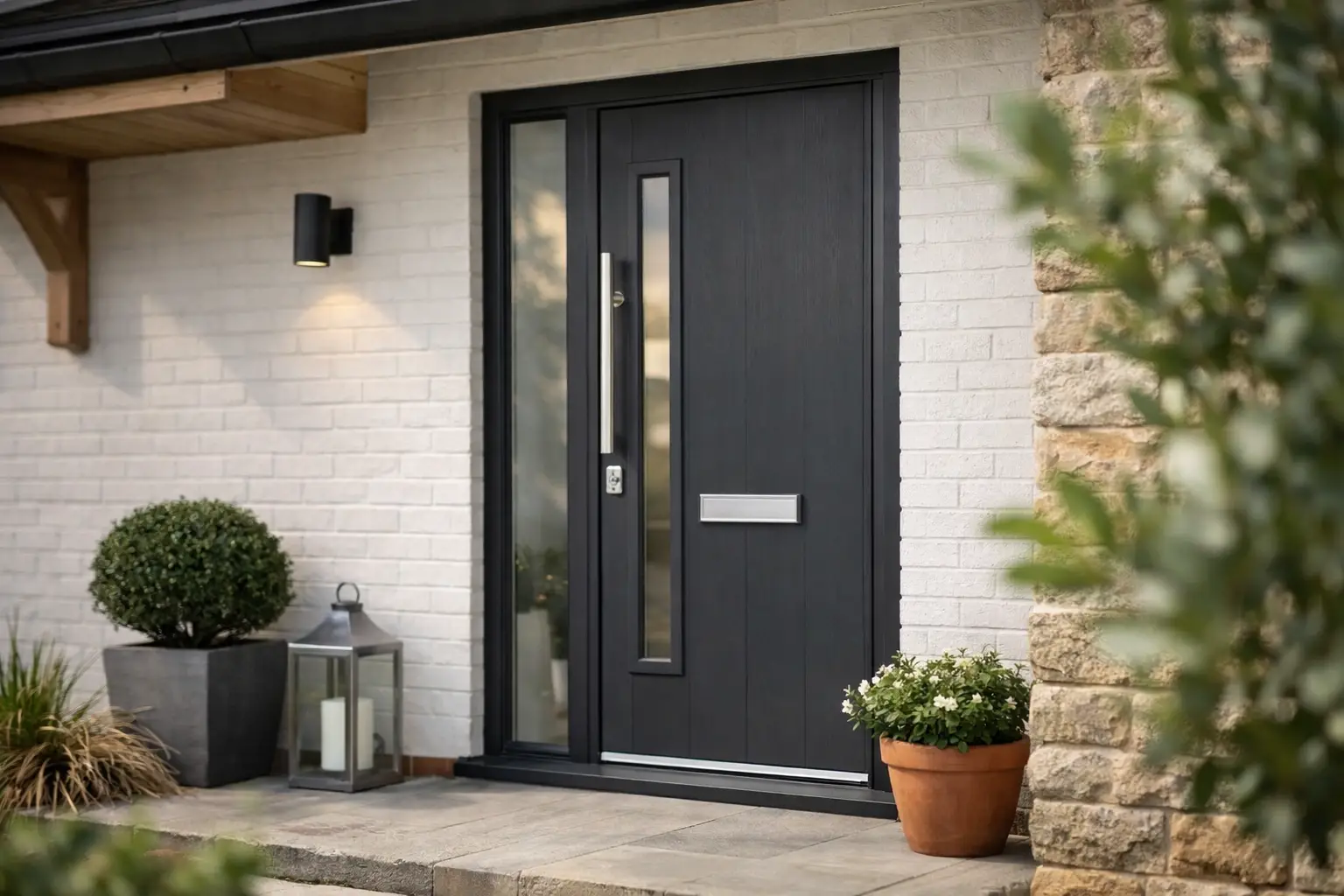
This is where composite doors often win people over. They usually have a more premium appearance, with deeper detailing, more realistic woodgrain finishes and a broader choice of colours and decorative styles. If you want your front door to make a strong first impression, composite gives you more room to get the look right.
uPVC doors have improved a great deal over the years, but they can still look more functional than aspirational, especially on period homes or higher-value properties. On some houses, that is perfectly fine. On others, it can stand out for the wrong reasons.
That said, not every home needs a statement entrance. On a modest property, a clean, well-fitted uPVC door in the right style can look neat and appropriate. It is less about chasing the premium option and more about choosing what fits the property.
Energy efficiency and comfort
Homeowners often ask which option keeps the heat in better. In the composite doors vs uPVC discussion, both can perform well, but composite doors often have the edge because of their insulated solid core and tighter overall build.
A good front door should help reduce draughts and support the rest of your home’s insulation. If your current door feels cold, rattles in bad weather or lets heat escape, either upgrade may make a noticeable difference. Composite doors usually feel more thermally stable, particularly in exposed entrances where the weather hits hard.
Still, energy efficiency is not just about the slab itself. Glazing panels, seals, thresholds and installation all matter. If there are gaps around the frame, even an expensive door can underperform.
Maintenance and long-term wear
Both uPVC and composite doors are fairly low maintenance compared with traditional timber, which is a major reason they are so popular. Neither should need regular sanding or repainting, and both can usually be kept in good condition with a simple clean.
Composite doors tend to hold their appearance better over time. They are less likely to show the same level of wear, fading or surface tiredness as cheaper plastic doors, particularly on front elevations exposed to sun and rain. They also tend to feel less flimsy after years of use.
uPVC doors are easy to maintain, but over a long period they can sometimes discolour, lose a little of their crisp finish or feel less substantial. That does not happen to every door, and product quality makes a big difference, but it is a fair point when comparing lifespan and appearance.
Which door suits which homeowner?
If you are planning to stay in your home for years, want the best possible first impression and care about strength, finish and long-term value, a composite door is often the better investment. It suits homeowners who see a front door as more than a basic necessity.
If you are working to a stricter budget, replacing a back door, upgrading a rental property or simply want a clean, practical solution, uPVC can be the smarter choice. There is no shame in that. A properly specified uPVC door still offers security, efficiency and reliability at a lower cost.
This is often where honest advice matters most. A good installer should not push one option on everyone. They should ask how you use the entrance, what style suits the property, what your budget is and what matters most to you.
A few common misconceptions
One common assumption is that uPVC doors are always poor quality. That is not true. There are entry-level products that feel basic, but there are also well-made uPVC doors that perform perfectly well for many years.
Another is that composite doors are always worth the extra money. Again, not necessarily. If the door is for a side entrance that gets little attention, or if your budget is already stretched by other home improvements, paying more may not deliver enough benefit to matter.
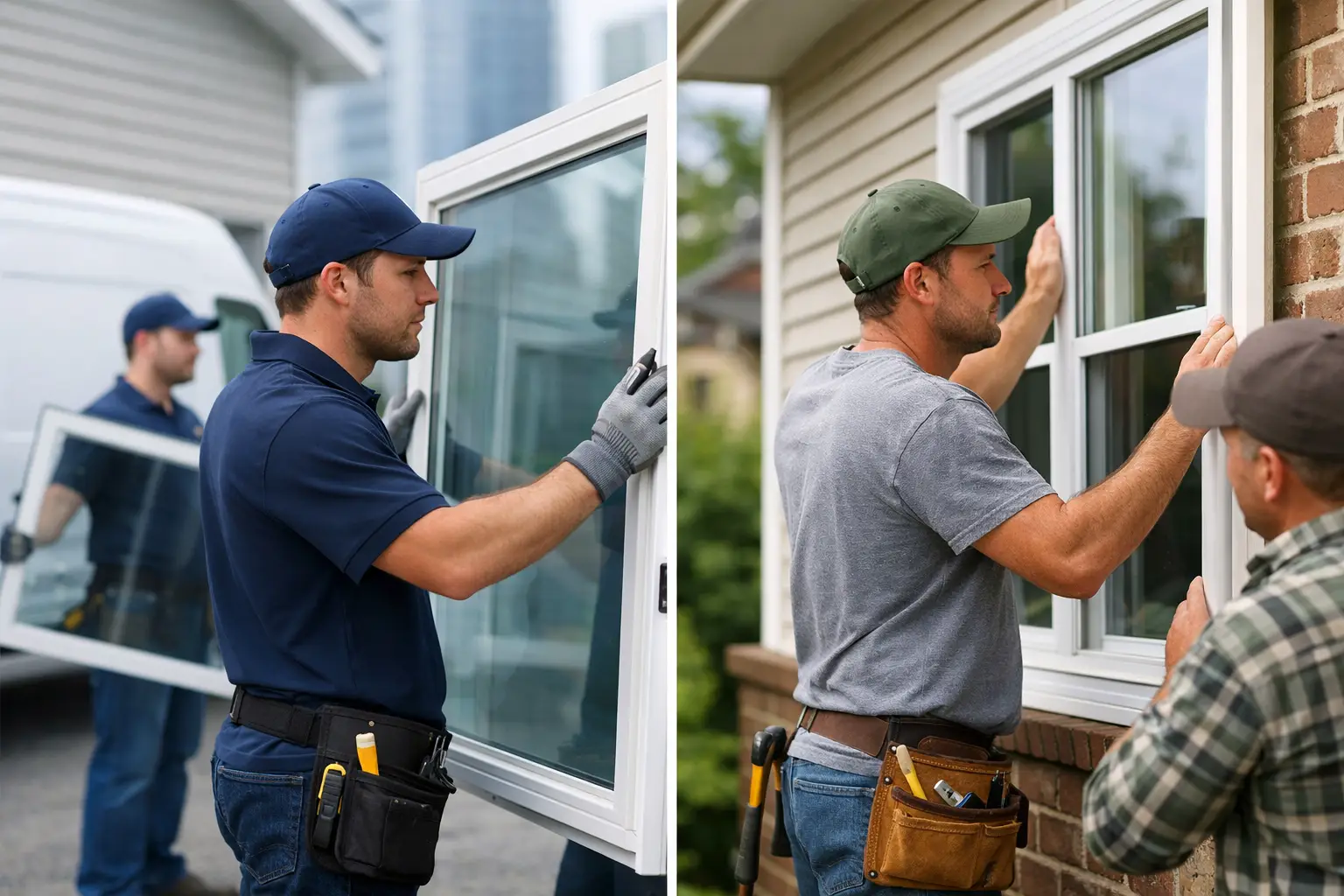
People also sometimes focus too heavily on the door leaf and ignore the installation. In reality, measuring, fitting and finishing are just as important as the material. A door should close properly, seal correctly and sit square within the frame. That is where experienced in-house fitting matters.
So, which should you choose?
If you want the short version, composite doors are usually the stronger, smarter and more premium option, while uPVC doors are the more budget-friendly and practical one. Neither is automatically right for every home.
Think about where the door is going, how visible it is, how much use it gets and how long you want it to stay looking its best. If your front door is a focal point and you want to improve both security and appearance, composite is often money well spent. If you need a dependable replacement at a more affordable price, uPVC remains a solid choice.
For homeowners in Leicester and the surrounding area, the best results usually come from seeing the options properly, comparing finishes side by side and getting straightforward advice based on the property rather than a sales script. A front door is something you use every day. It is worth choosing one that feels right each time you come home.